
Best Time to Post on Facebook Marketplace (And What Else the Algorithm Actually Wants)
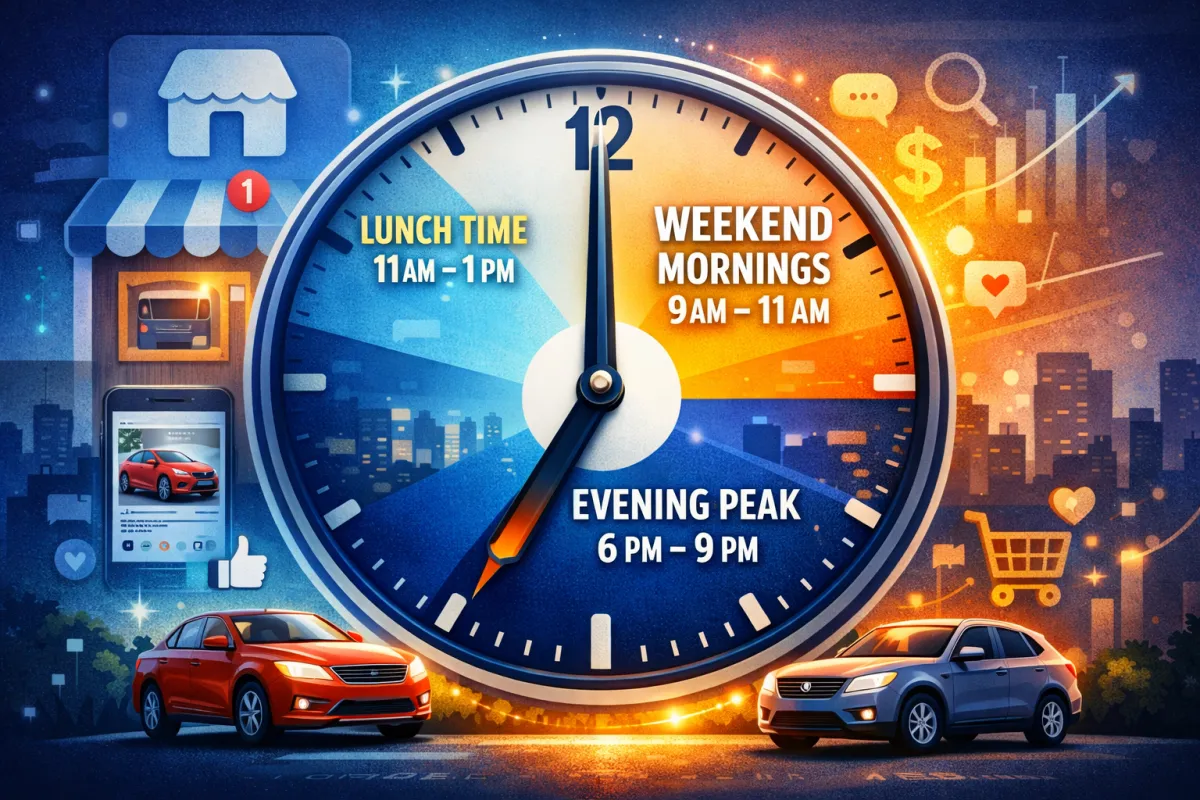

Time Your Postings on Facebook Marketplace
Most dealers treat posting like a coin flip. They upload a listing whenever they get around to it and hope buyers are scrolling at that exact moment. Timing matters more than most people realize.
The best time to post on Facebook Marketplace is Thursday through Sunday between 6 PM and 9 PM local time. Buyer activity spikes during evening hours when people are off work and browsing from home. Weekends see the highest overall traffic, especially Saturday morning between 9 AM and 11 AM.
Lunch hours are also worth targeting. Posting between 11 AM and 1 PM on weekdays catches buyers who are scrolling on their break. It is not as strong as evening windows, but it is far better than posting at 7 AM when most people are commuting.
The goal is to post right before peak traffic hits. That way your listing is fresh when the most eyes are on the platform.
Why the First Few Hours Are Critical
Facebook does not show every listing to every user. It decides which listings deserve visibility based on early signals.
When a new listing goes live, Facebook gives it a short window to prove itself. If buyers click, save, or message about it in the first few hours, the algorithm reads that as a signal of quality. It pushes the listing to more people.
If a listing goes live and gets no engagement, the algorithm pulls back. It gets buried under newer, more active posts. That listing might sit there for days without a single view.
This is why timing your posts matters so much. A listing that goes live at 2 AM gets its visibility window while most buyers are asleep. By the time traffic picks up the next morning, it is already old news.
Post when buyers are active and your listing starts its life with momentum.
What the Algorithm Actually Looks at Beyond Timing
Timing is the entry point. It is not the whole game.
Facebook's algorithm is always evaluating your listings and your account. It looks at dozens of signals at once. Dealers who understand those signals consistently outperform the ones who only think about when to post.
Here are the signals that matter most:
Response time. Facebook tracks how fast you reply to messages and displays it publicly on your profile. Slow responders get lower placement. Fast responders get rewarded with more visibility.
Listing quality. Complete listings with real photos, accurate pricing, and detailed descriptions perform better than thin ones. The algorithm favors listings that look trustworthy to buyers.
Account health. A history of policy violations, removed listings, or buyer complaints drags down your overall visibility. A clean account gets better placement across all listings.
Posting consistency. Accounts that post regularly signal to Facebook that they are active, legitimate sellers. Sporadic posting hurts your standing over time.
Engagement rate. Listings that get saves, clicks, and messages perform better. The more buyers interact with your posts, the more the algorithm promotes them.
Timing gets your listing in front of buyers at the right moment. Everything else determines whether it keeps performing after that.
How Listing Quality Affects Your Visibility
A poorly built listing does not just fail with buyers. It fails with the algorithm before a single buyer ever sees it.
Learn more about how Facebook Marketplace works for dealerships and what it takes to build listings that get consistent placement. Here is what the algorithm actually looks for:
Real photos. Stock images and low-quality photos signal that a listing may not be legitimate. Use clear, well-lit shots of the actual unit. More photos means more engagement, and more engagement means better visibility.
Complete fields. Every field left blank is a signal that something is off. Fill out year, make, model, price, mileage, and condition every single time. Do not skip anything.
Accurate pricing. Listings with no price or placeholder prices get deprioritized. Always include a real number. If you are open to negotiation, say so in the description.
Detailed descriptions. Vague descriptions get fewer clicks. Fewer clicks tell the algorithm the listing is not worth promoting. Write a real description for every unit with the key details a buyer needs to make a decision.
The more complete and accurate your listing is, the more the algorithm trusts it. That trust translates directly into visibility.
How Your Account Health Impacts the Algorithm
Your listing quality matters. Your account health matters just as much.
Facebook evaluates your entire account history when deciding how much visibility to give your listings. One bad listing can drag down everything else you post.
Here is what affects your account health:
Removed listings. Listings that get flagged or removed for policy violations leave a mark. Repeat violations push your account into a lower visibility tier.
Buyer feedback. When buyers report your listings as misleading or complain about your responses, those signals accumulate. Enough complaints trigger a review that can restrict your account.
Response rate. Facebook measures how consistently you respond to messages. A low response rate hurts your account standing and your listing placement.
Posting patterns. Dumping large volumes of listings all at once looks like spam. Facebook's algorithm is built to catch it. Paced, consistent posting keeps your account in good standing.
Dealers with clean account histories get better placement on every listing they post. It is a compounding advantage that builds over time.
How Dealers Can Stay Consistent Without the Manual Work
Knowing what the algorithm wants is one thing. Executing it consistently across a full inventory is another.
Most dealers struggle to post at the right times every day. They forget to remove sold listings. They rush through descriptions when they are busy. They dump inventory all at once when they finally get around to it. Every one of those habits hurts their visibility.
Shiftly's dealer listing software is built to fix that. Here is how it lines up with what the algorithm actually rewards:
Paced posting. Listings go out at intervals that keep your account looking natural to Facebook. No spam flags. No visibility penalties.
Consistent timing. Instead of posting whenever someone gets around to it, listings go live during peak windows when buyer traffic is highest.
AI sold alerts. When a unit sells, your team gets notified immediately to pull the listing. No stale inventory dragging down your account health.
Complete listings every time. Shiftly generates descriptions and pulls key details automatically. Every listing goes up complete and compliant without your team spending an hour on each one.
Dashboard visibility. Managers can see exactly what is being posted, by whom, and when. Consistency is no longer a guessing game.
The result is an account that the algorithm trusts. That trust builds over time and compounds into better placement on every listing you post.
Put the Algorithm to Work for Your Dealership
Timing is where it starts. Thursday through Sunday evenings, Saturday mornings, and weekday lunch hours give your listings the best chance at a strong first impression.
But timing alone will not carry you. The algorithm rewards response speed, listing quality, account health, and posting consistency. Dealers who get all of those right do not just show up — they dominate their local market on Marketplace.
The good news is that none of this requires more hours from your team. It requires better systems.
Schedule a demo with Shiftly today and see how dealers are building consistent Marketplace presence without the manual grind.
Shiftly Auto Blog Articles







SCHEDULE TODAY
GET STARTED
Want to see a demo of our software or have questions about our service?
Fill out the form, and we will reach out to you!

Product
Shiftly Overview
Why Social Media
Contact
Privacy Policy.. Cancellation Policy Terms & Conditions
© 2025 Shiftly. All rights reserved

