
The Car Buying Process: Why Buyers Ghost Dealerships and How to Stop It

Why Ghosting Is Such a Big Problem in the Car Buying Process
Every dealer knows the feeling. A buyer messages about a car, asks good questions, seems genuinely interested—then vanishes. No response to follow-ups. No explanation. Just silence.
It happens more than most dealers want to admit. And it is costing them more than they realize.
The average dealership loses dozens of potential deals every month to ghosting. Some of those buyers ended up at a competitor. Some talked themselves out of buying. Some just needed a little more from the dealer to stay engaged—and never got it.
Ghosting feels random. It is not. There are patterns to when and why buyers disappear. Once you understand those patterns, you can do something about them.
Where in the Car Buying Process Buyers Actually Drop Off
Ghosting does not happen at random points in the car buying process. It clusters at specific moments where buyers hit friction, feel uncertain, or lose confidence in the dealer.
After the first message. A buyer reaches out about a vehicle and the dealer takes hours to respond. By then the buyer has moved on. This is the most common drop-off point and the most preventable.
After a price quote. A buyer asks for pricing and the dealer sends a number without context. No explanation of value, no acknowledgment of the buyer's situation. The buyer goes quiet because they are now shopping that number around elsewhere.
After the test drive. The buyer came in, drove the car, seemed excited — and then stopped responding. This usually means an objection went unaddressed during the visit. Something made them hesitate and nobody caught it.
During financing conversations. Money talk makes buyers nervous. If financing feels complicated or the dealer seems impatient, buyers shut down. They would rather ghost than have an uncomfortable conversation.
After a follow-up that felt pushy. A buyer needed a day to think and the dealer sent three messages in 24 hours. Now the buyer feels hunted and stops responding altogether.
Each of these moments is a decision point. Handle them well and the buyer stays in the conversation. Handle them poorly and they disappear.
Why Buyers Ghost: The Real Reasons
Dealers often assume ghosting means the buyer was never serious. That is rarely true.
Most buyers who ghost were genuinely interested at some point. Something changed their experience and they chose silence over confrontation. Here is what actually drives it:
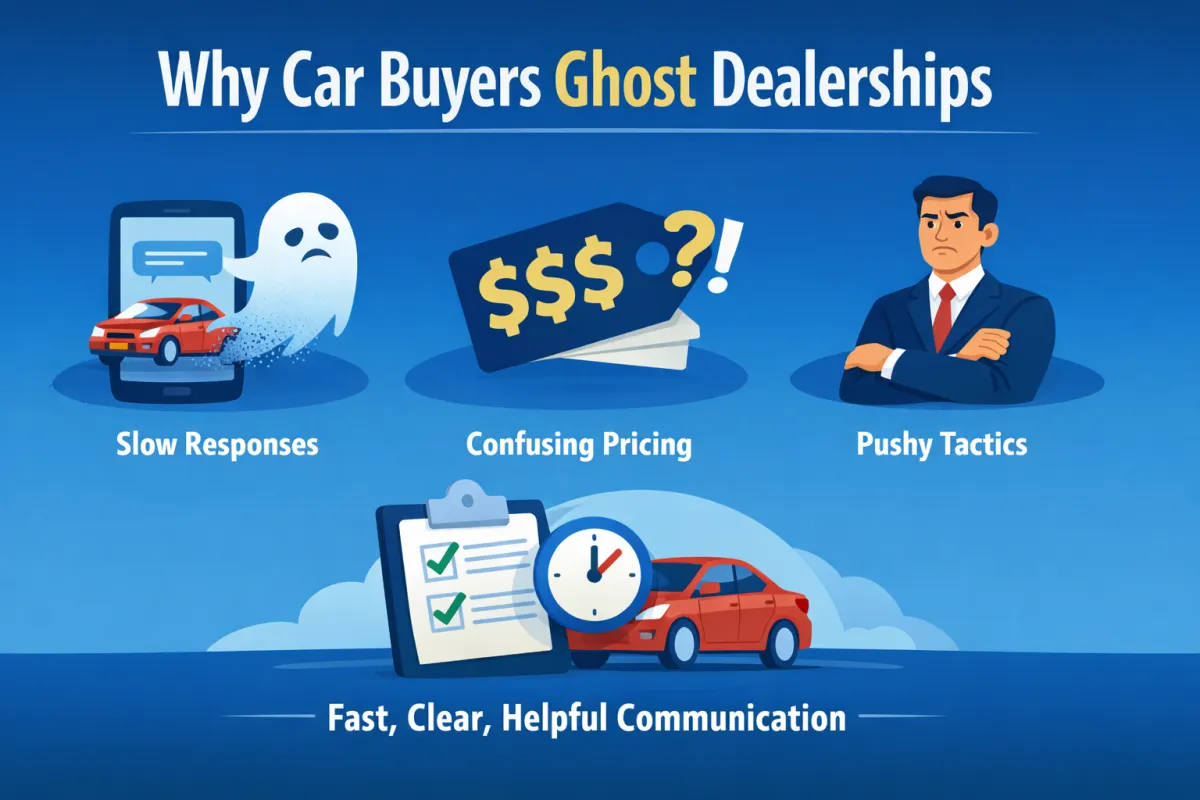
Slow response times. The car buying process moves fast in the buyer's mind. They get excited, they reach out, and they expect a quick reply. A response that comes hours later feels like the dealer does not care. The excitement fades and the conversation never recovers.
Feeling pressured. Buyers can sense when a salesperson is pushing too hard. Aggressive follow-ups, urgency tactics, and overselling all trigger the same instinct — pull back and go somewhere that feels less intense.
Not enough information upfront. Vague listings, missing prices, and incomplete descriptions make buyers do extra work. If your listing does not answer their basic questions, they will find one that does.
A better option showed up. This one is hard to control entirely. But dealers who respond fast, communicate clearly, and present their inventory well give buyers far less reason to keep looking.
A bad first impression. The listing was messy, the photos were low quality, or the first response felt copy-pasted and generic. First impressions in the car buying process matter more than dealers realize. A buyer who is unimpressed early never becomes a buyer at all.
Ghosting is feedback. It is telling you where your process is breaking down.
The Role Response Time Plays
If there is one variable that has the biggest impact on whether a buyer ghosts or converts, it is response time.
Research consistently shows that leads contacted within five minutes are far more likely to convert than those contacted after 30 minutes. After an hour the odds drop significantly. After 24 hours most leads are effectively dead.
This matters especially on Facebook Marketplace. Learn more about how Facebook Marketplace works for dealerships and why the platform is built around real-time buyer communication. When a buyer messages about a car on Marketplace, they are in the moment. They are excited right now. A fast response catches that energy and moves the conversation forward.
A slow response does the opposite. By the time the dealer replies, the buyer has already messaged two other sellers and is comparing options. You are starting from behind.
The five-minute rule is not a suggestion. It is the difference between closing deals and wondering why leads keep going cold.
Response time is also visible on Facebook. The platform displays your average response time publicly on your profile. Buyers see it before they ever reach out. A badge that says "Typically responds within minutes" builds trust before the conversation starts. One that says "Typically responds within a day" kills it.
How to Keep Buyers Engaged at Every Stage
Knowing where buyers drop off is only useful if you change how you handle those moments. Here is what works at each stage:
At the first message. Respond within five minutes. Do not just confirm availability — ask a question that opens a real conversation. Find out what they are looking for and show them you are paying attention.
After a price quote. Do not just send a number. Give it context. Explain what makes the vehicle worth it. Acknowledge their budget if they shared one. Make them feel like you are working with them, not just at them.
After the test drive. Follow up the same day with a warm, low-pressure message. Ask what they thought. Invite them to share any questions or concerns. Give them a comfortable opening to tell you what is holding them back.
During financing conversations. Slow down. Make the process feel simple and collaborative. Buyers who feel respected during financing are far less likely to ghost than buyers who feel rushed or judged.
On follow-up. One follow-up message is helpful. Two can work. Three in 24 hours is too many. Give buyers room to breathe. A message that says "still here if you have questions" lands better than one that creates urgency they did not ask for.
The goal at every stage is to make the next step feel easy. Buyers ghost when the path forward feels uncomfortable or unclear. Remove that friction and most of them stay.
How the Right Tools Keep Leads From Slipping Through
Even dealers who understand all of this struggle to execute it consistently. The problem is not knowledge—it is volume.
When a team is managing 50 Messenger conversations, multiple follow-up threads, and a full inventory of listings, leads slip through. Response times stretch. Follow-ups get forgotten. Sold listings stay live and create frustration before the conversation even starts.
Shiftly's dealership listing tool is built to close those gaps. Here is how it helps dealers stop losing buyers they already had:
Clean, complete listings from the start. Every listing goes up with real details and accurate information. Buyers get a strong first impression before they ever send a message. That reduces the friction that causes early ghosting.
AI sold alerts. When a unit sells, the team gets notified immediately to pull the listing. Buyers never reach out about a car that is already gone. That single habit eliminates one of the most common sources of buyer frustration.
Dashboard visibility. Managers can see listing activity across the entire team. Gaps in posting consistency get caught early. The team stays accountable and inventory stays visible.
Consistent presence. Shiftly keeps your inventory in front of local buyers continuously. More listings means more conversations. More conversations means more chances to get the response time and follow-up right.
A buyer who gets a fast response to a complete, accurate listing is a buyer who stays in the conversation. That is the foundation every dealer needs before anything else works.
Stop Losing Deals You Already Won
Ghosting is not bad luck. It is a signal that something in the car buying process broke down—and most of the time it is fixable.
Slow response times, vague listings, pushy follow-ups, and unaddressed objections are all within a dealer's control. Fix those and the ghosting rate drops. More buyers stay in the conversation. More conversations turn into visits. More visits turn into deals.
The dealers who crack the code on this do not just sell more cars. They build a reputation in their market for being easy to work with. That reputation compounds over time into more referrals, more repeat buyers, and more inbound leads.
Schedule a demo with Shiftly today and see how dealers are keeping more buyers engaged from first message to final sale.
Shiftly Auto Blog Articles






SCHEDULE TODAY
GET STARTED
Want to see a demo of our software or have questions about our service?
Fill out the form, and we will reach out to you!

Product
Shiftly Overview
Why Social Media
Contact
Privacy Policy.. Cancellation Policy Terms & Conditions
© 2025 Shiftly. All rights reserved

